

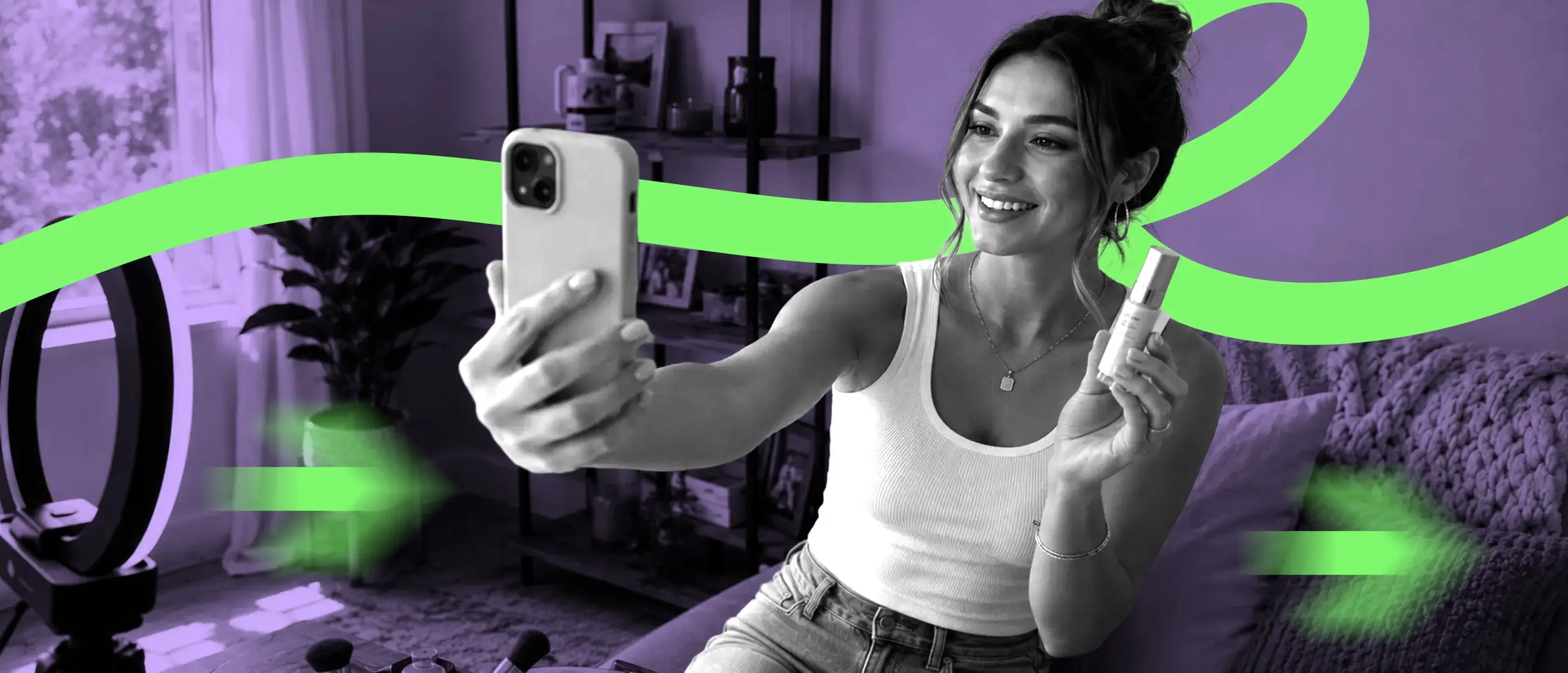
UGC-style ads have outperformed traditional polished ad creative across most social platforms for several years now, and that trend has only strengthened. The reason is simple: audiences have gotten extremely good at pattern-matching "this is an ad" and scrolling past it, and UGC-style content resembles the organic content people actually want to see, which buys it more attention before the brain files it as an ad.
Originally, UGC meant literal content from real customers. Today, the term has broadened to include creator-made content and even scripted content shot in a UGC style (handheld, casual, direct-to-camera), because the format itself, not necessarily its literal origin, is what drives the performance benefit. The important thing is the aesthetic and delivery style, not strictly who filmed it.
The problem/solution testimonial is probably the most reliable: someone describes a specific problem they had, shows the product solving it, and gives a genuine-sounding reaction, which works because it mirrors how people actually recommend products to friends. The "get ready with me" or process integration format takes a different approach, showing the product naturally woven into a routine rather than being the sole focus of the video, and it works particularly well for beauty, wellness, and lifestyle products where context builds more trust than a direct pitch. Unboxing and first-impression content still performs consistently too, especially for products with a strong visual reveal moment. Comparison and reaction videos, where someone puts your product up against a competitor or "the old way of doing this" on camera, work especially well for anything solving a clear, specific pain point. And regardless of which of these formats you use, the single biggest driver of performance is still the strength of the hook in the first couple seconds, since that's what determines whether someone stops scrolling at all.
UGC-style content isn't a full replacement for traditional ad creative, it's a complement. Polished, brand-forward creative still performs well for top-of-funnel brand awareness and for higher-consideration purchases where quality signaling matters (premium products, for example). The strongest performing ad accounts typically run a mix: UGC-style content driving cost-efficient engagement and clicks, with more polished creative supporting brand perception and higher-consideration conversion moments.
The challenge most brands run into isn't understanding that UGC works, it's producing enough of it consistently. Actual customer content, sourced through outreach, reviews, or a formal ambassador program, is the most authentic version but also the hardest to scale predictably. Creator partnerships, paying creators to produce UGC-style content specifically for ad use rather than posting it organically themselves, give you more control over messaging while keeping the authentic aesthetic intact. And scripted UGC-style production, where the format and delivery style is intentionally built to match UGC conventions even though it's professionally produced, tends to be the most scalable and controllable option of the three, and it's increasingly indistinguishable from "real" UGC in terms of ad performance.
Does UGC-style content need to come from actual customers to work?
No. What drives performance is the format and delivery style, not strict authenticity of origin. Scripted content produced in a UGC style performs comparably when done well.
How many UGC ad variations should I be testing at once?
Enough to avoid creative fatigue on any single winning ad, generally several fresh hooks or angles tested on a rolling basis rather than relying on one UGC ad to carry a campaign for months.
Is UGC-style content cheaper to produce than traditional ad creative?
Often, yes, especially scripted UGC-style content, since it typically requires less elaborate production (lighting, sets, equipment) than traditional polished ad creative, while frequently outperforming it on cost-per-result.
No recruiting, no onboarding, no overhead. Just on-demand creative capacity that grows with your business and adapts to your needs.


.svg)